Human Software is a book about the importance of people working together to overcome corporate machinations. It’s a story about how humans are blamed for mistakes made by computers. A human story set in the modern world of software development, where engineers and managers are often pulled in competing directions simultaneously.
Two plus years ago, when I started writing Human Software, I had a clear vision for the aesthetic. It was crucial for the overall feel of the book and the appearance of the final product. I knew I wanted a boat, Beth and Dominic’s “Buffy”, on the cover. I knew I wanted the bridge, a cooling tower. An industrial feel with the freedom of the sea in the foreground. Many older books inspired me, as did many artists and stories I’d read. Iain Banks and his fiction novels of the 80s, including “The Wasp Factory”, “The Bridge” and “Complicity”. Alisadair Gray’s “Lanark” and his artwork. I also drew inspiration from artists such as Escher, Whistler, Edward Hopper as well as modern artists such as Kay A Brown – an artist from the South Coast of the UK whose specialises in wood block art.
Finding a Collaborator
What I really wanted was a hand-drawn, human-created cover. I posted on Reedsy, interviewed illustrators and cover artists, and shared reference images — Peter Brown’s covers for Iain Banks, the stark industrial aesthetic I was after. Nobody could quite see where I was going. The vision was too specific, too personal, too rooted in a particular feeling about a particular place.
So I did it myself.
The First Cover
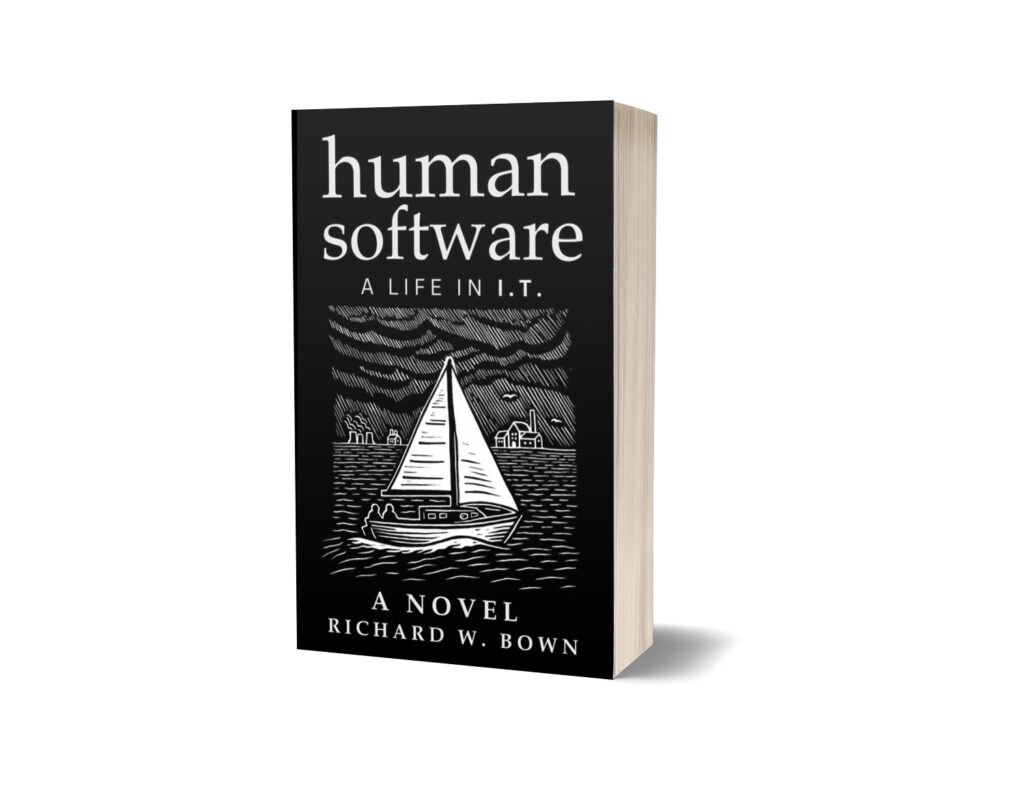
The cover of Human Software launched in September 2025 with a hand-drawn woodcut of a sailing boat on a stormy sea. I drew it, refined it through Canva, and used a single ChatGPT prompt to convert the scan into a higher-contrast woodcut style before touching it up manually. I was proud of the process and the craft behind it.
But it was sending the wrong signal entirely. Readers thought it was a memoir. Or sailing fiction. Or a cosy literary novel about coastal life. Nobody was picking it up, thinking thriller. Nobody was thinking corporate AI anxiety. The subtitle, “A Life in I.T.” also made that worse.
I’d written the right book and dressed it in completely the wrong clothes.
The Rethink
After honest feedback from readers and a lot of reflection, I went back to the start. What does this book actually feel like? What world does it live in? Not the world of wooden boats and quiet coastlines. The world of failing systems, corporate indifference, humans trying to keep things running at 3am while the machines or the middle managers take the credit.
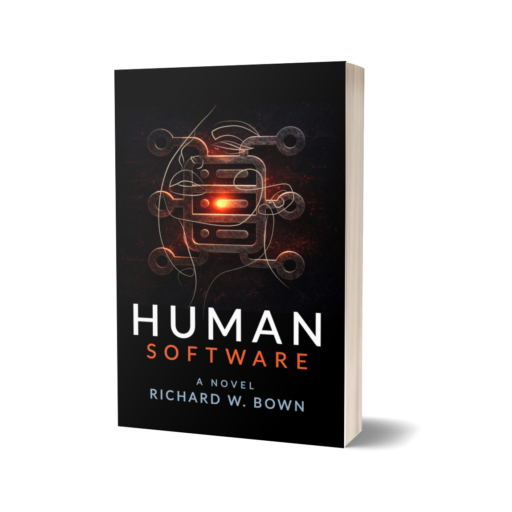
The new cover came from that rethink. Dark, industrial, the circuit-organism with its ember glow. I thought it finally looked like the book it actually was… it was certainly closer to what I wanted but after running with that for six weeks, I felt it wasn’t connecting with readers either and honestly it was too dark. One of the beauties of self publishing is being able to change your mind. So I tweaked it again.
The Final Cover
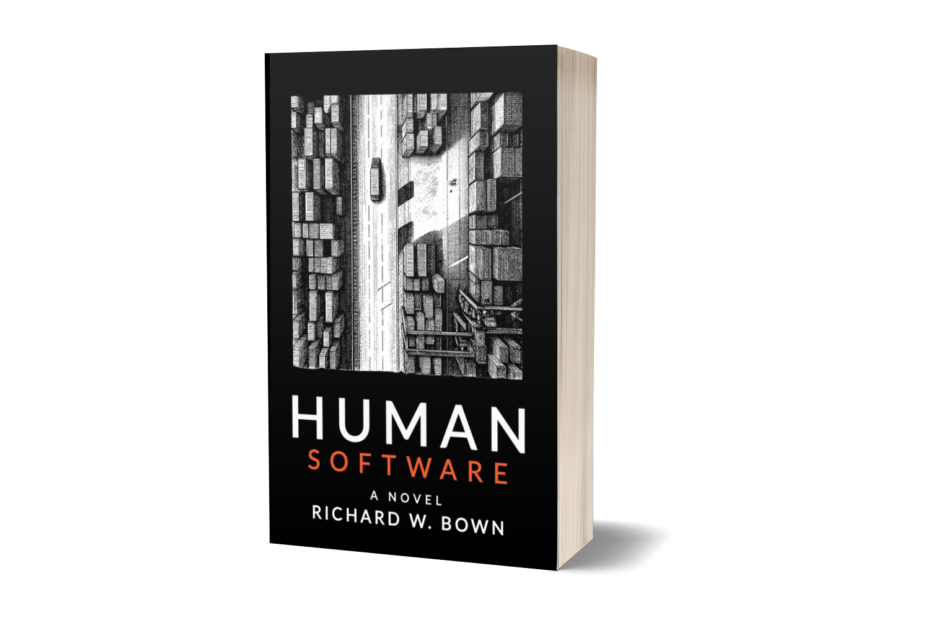
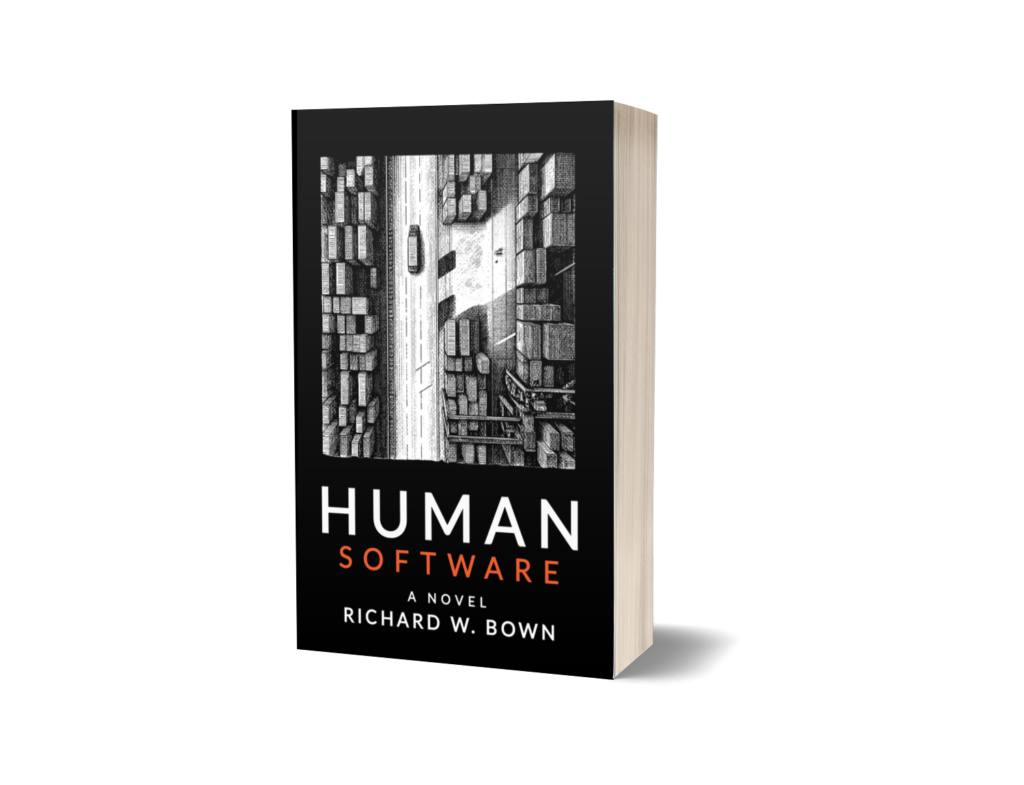
This time, I went for an aerial view of a container port. This spoke to me immediately, and using Canva filters, I positioned it on the cover. It was a meeting point between the initial black-and-white aesthetic and the gritty, port-town realism and corporate intrigue I wanted to convey. I’m really pleased with the final cover and don’t anticipate it changing again. If you’ve already bought the earlier covered versions, you’ve now got a limited edition!
Mapping the Future
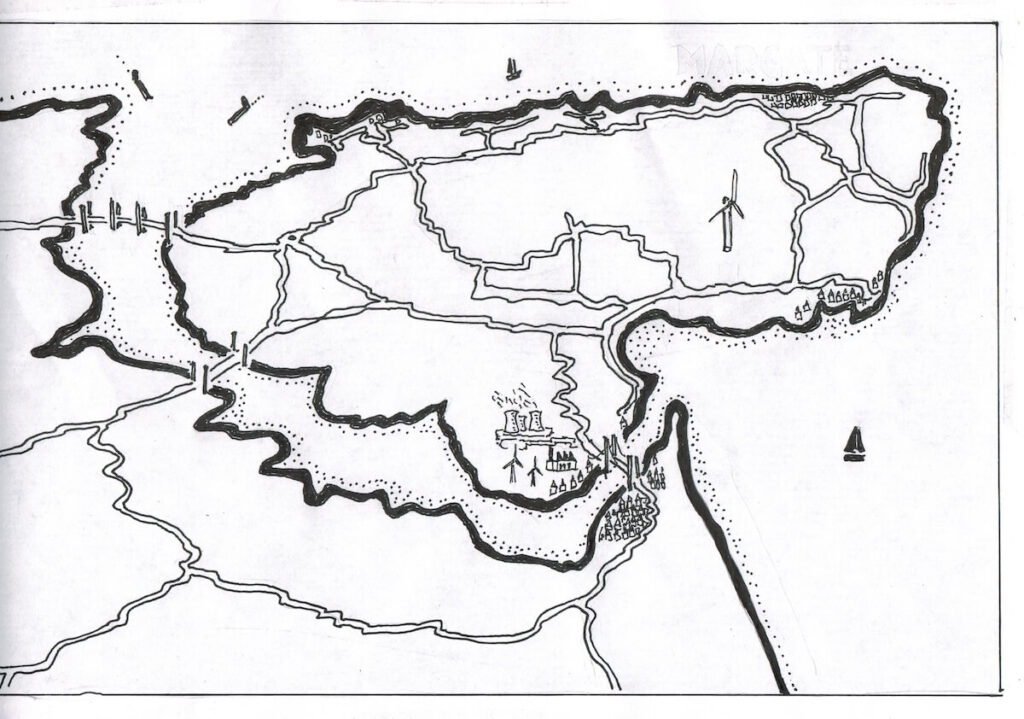
One thing that survived the cover change, and that I’m quietly proudest of, is the map.
Human Software is set in Sandport, a fictional Kent port town I created as an amalgam of Sandwich and the Richborough and Stonar industrial estates. Sandport stands on the Wantsum Channel – a long-gone waterway that once divided the Isle of Thanet from the rest of Kent. I redrew that geography from scratch, reimagining what Kent might look like if the channel had never silted up.
So I started to reimagine this part of the world, and then I redrew the map of Kent with some research. I ended up with a hand-drawn map.
The map went through the same hand-drawn, manually refined process as the original cover. Drawn, scanned, adjusted, rescanned. It appears in every copy of the book, print and digital. It’s a piece of fictional cartography that I hope makes Sandport feel like somewhere you could find on an old Ordnance Survey if you knew where to look.


Realising the Importance of Style
There is a saying in writing “Kill your Darlings” from a quote by William Faulkner. The meaning being, make sure you don’t get attached to your own writing so much that you can’t effectively edit it away at any point. I paid attention to this when I was writing the book, however I forgot to apply the same logic to the cover. I let my darling on to the cover – my picture, my process. I’ve learnt the hard way that the cover is vital in order to communicate effectively to the reader what the book is about.
A cover isn’t decoration. It’s a promise to the reader about what kind of experience they’re about to have. Get it wrong, and the right readers walk past. Get it right, and the book finds its people. It’s now finding its people.
Human Software is available now in paperback and e-book.