
Stories about organisations that become too large, too complex and too detached from the people doing the work never really age. This is the territory that Human Software occupies. Set in the fictional Kent port town of Sandport, the novel follows Beth, an engineer trying to keep a struggling UK operation running, and Chrissie, the American executive sent to oversee an AI-driven restructuring that threatens to change everything. Neither woman is a villain. Neither is entirely right. Both are trapped inside a system that seems to have developed a logic of its own.
The Circle — Dave Eggers

Eggers’ novel remains one of the sharpest explorations of how technology companies can transform ideals into obligations. What begins as transparency, connection and efficiency gradually becomes surveillance, conformity and control.
What makes The Circle unsettling is that nobody wakes up one morning and decides to become evil. The system simply keeps optimising itself. Or at least that’s the excuse it sells.
Human Software shares that fascination with systems behaving exactly as they were designed to behave and producing consequences nobody is willing to own.
The Phoenix Project — Gene Kim
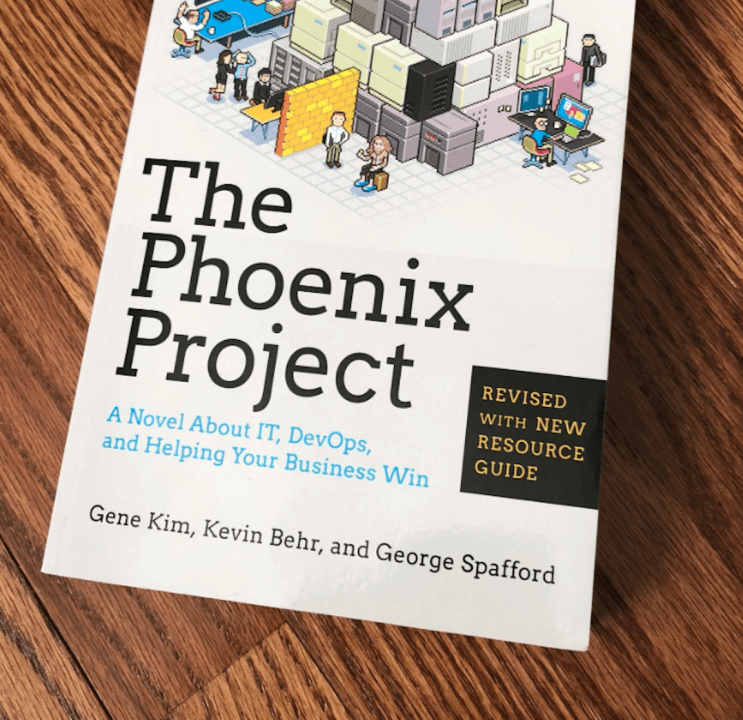
For anyone who has worked in technology, The Phoenix Project captures something instantly recognisable: the endless firefighting, the competing priorities, the feeling that critical systems survive largely through the dedication of exhausted individuals.
It’s a book about making organisations work better.
Human Software asks a different question: what happens when the organisation decides it can function without the people who actually understand how it works?
If The Phoenix Project made you feel seen as a technology professional, Human Software explores the emotional and human cost that often sits behind the process diagrams.
Office Space — Mike Judge

Few works have captured the absurdity of corporate life more accurately than Office Space. The meetings, the management layers, the consultants, the growing sense that nobody quite knows why things are being done.
Office Space is a dark comedy but it’s a comedy. Human Software starts from the same observations but treats the consequences more seriously. When decisions are disconnected from reality, people lose jobs, communities change and relationships fracture. It’s absurd but then real life damage occurs to real people.
What Makes Human Software Different?
At its heart, Human Software is not really a novel about technology.
It’s a novel about people living inside systems they didn’t create and can’t fully control.
It places two women at the centre of that story: Beth, trying to preserve something valuable, and Chrissie, tasked with transforming it. Their conflict drives the novel, but neither character has access to the whole truth.
It’s also a distinctly British story. The collision between a global technology company and a declining English port town isn’t background detail – it’s the central tension of the book. Questions of work, identity, place and belonging matter just as much as technology.
And unlike many workplace stories, Human Software doesn’t offer a neat solution. There is no framework that fixes everything. No consultant with all the answers. No triumphant final presentation.
Just people doing their best inside systems that were supposed to help them.
If you’ve ever sat in a meeting where the people making decisions seemed furthest from the consequences, if you’ve ever watched efficiency become more important than understanding, or if you’ve ever wondered who pays the price when organisations change, Human Software may feel uncomfortably familiar.
But don’t take my word for it, have a look at some of the reviews.